
In Chichester and nationally —we are seeing more families being tempted by national direct cremation companies. Huge advertising campaigns on TV and Social Media can not be avoided.
The message is usually straightforward: simple cremation, arranged quickly, low cost, no fuss.
The more you loved someone, the more you grieve. … The happiness of love turns to sadness when unspent. Grief is just love with no place to go.
Jamie Anderson
And for some people, that’s exactly what they want. There’s nothing wrong with simplicity. But what we’re increasingly seeing locally is that the reality of what families are left with doesn’t always match what they thought they were buying.
The part no one really prepares you for
Direct cremation can be the right choice. It can reflect someone’s wishes perfectly: no ceremony, no attention, just a simple arrangement.
But grief doesn’t really work like an admin process.
As the saying goes, “grief is just love with no place to go.” And when there’s no moment to gather, no space to reflect, no shared goodbye, families are often left trying to work that out later—sometimes long after the cremation has already taken place.
Local funeral directors in and around Chichester are seeing more and more families come to them afterwards saying the same thing: “We didn’t realise how it would feel afterwards.” Counsellors are supporting people who didn’t get that chance to say goodbye.
Not because anything went wrong. But because nothing was really held either.
“Cheaper” isn’t always as clear as it sounds

National advertising often positions direct cremation as significantly cheaper than using a local funeral director.
But when you compare like for like—simple cremation to simple cremation—the difference is often much smaller than people expect.
Many independent funeral directors in Chichester now offer straightforward, unattended cremation options that are close in price, while still offering something fundamentally different: local contact, guidance, and someone who is there in person when needed.
When families try to “help” by taking control
There’s another pattern that’s becoming more common, and it’s a sensitive one.
Sometimes it’s adult children arranging things for their parents. Sometimes it’s parents making arrangements in advance, thinking they are helping their family by “sorting everything out” and keeping costs down.
The intention is almost always good. It comes from love, responsibility, and not wanting to be a burden.
But often there is no real conversation beforehand about what the rest of the family might actually need at the time of loss.
And afterwards, families can be left in a difficult place—grateful for the simplicity, but also realising they didn’t get the chance to say goodbye in a way that felt right for them. There is no option to spend time with their loved one locally as they have been transported to a central mortuary many miles away.
A simple decision made with good intentions can unintentionally remove choices from the people left behind.
Where the money goes matters more than people realise
It’s also worth gently considering where the money ends up.
National direct cremation providers operate at scale, with centralised systems and corporate structures. That’s their model.
Local funeral directors are often independent or family-run businesses rooted in the community. The money spent with them stays local—supporting local staff, premises, and services that exist in the same towns and villages as the families they serve.
Some people also choose to place money in a high-interest savings account. This keeps funds under family control, allows flexibility, and avoids locking decisions into a corporate structure years in advance.
What doesn’t show up in the brochure
One of the biggest differences families notice is not about price or process—it’s about human contact.
With national services, arrangements are often handled remotely, via a call centre. It can feel efficient, but also distant at a time when things already feel overwhelming.
Local funeral directors offer continuity. You speak to the same people. You meet face to face. You’re not starting again every time you pick up the phone.
Whether it’s a simple direct cremation, a service at Chichester Crematorium, or something more personal in a local church or countryside setting, that steady human presence often becomes the most important part of all.
Think local, talk first
This isn’t about telling people there is only one right way to do things. There isn’t a single right way.
It’s about slowing the decision down just enough to make sure it’s really a shared one—not something decided in isolation with the best of intentions, but without the full conversation it deserves.
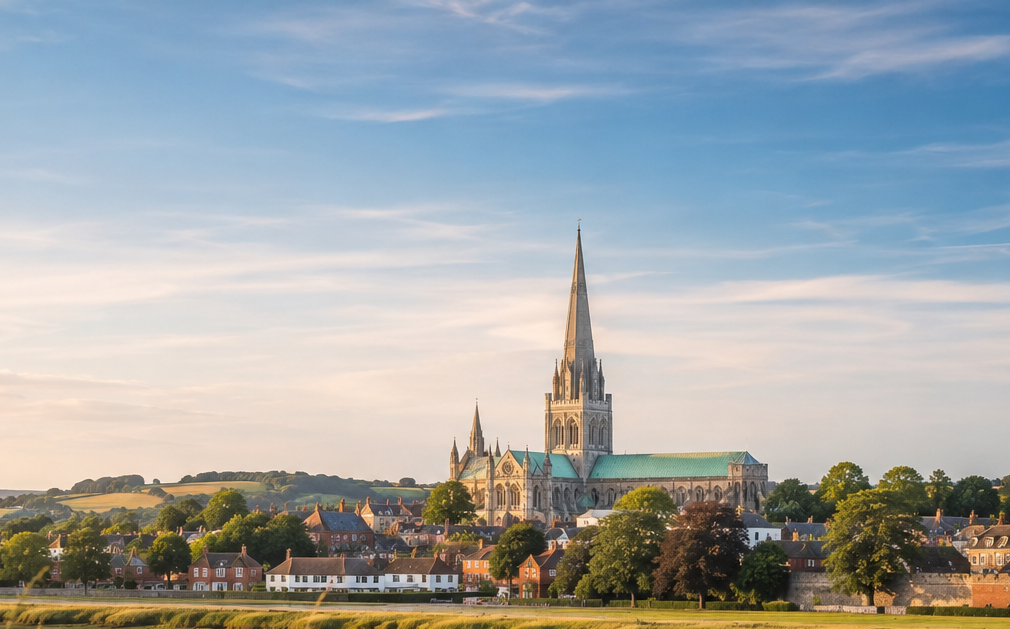
And in a place like Chichester, where community still really matters, those conversations are worth having before decisions are made—not after.